

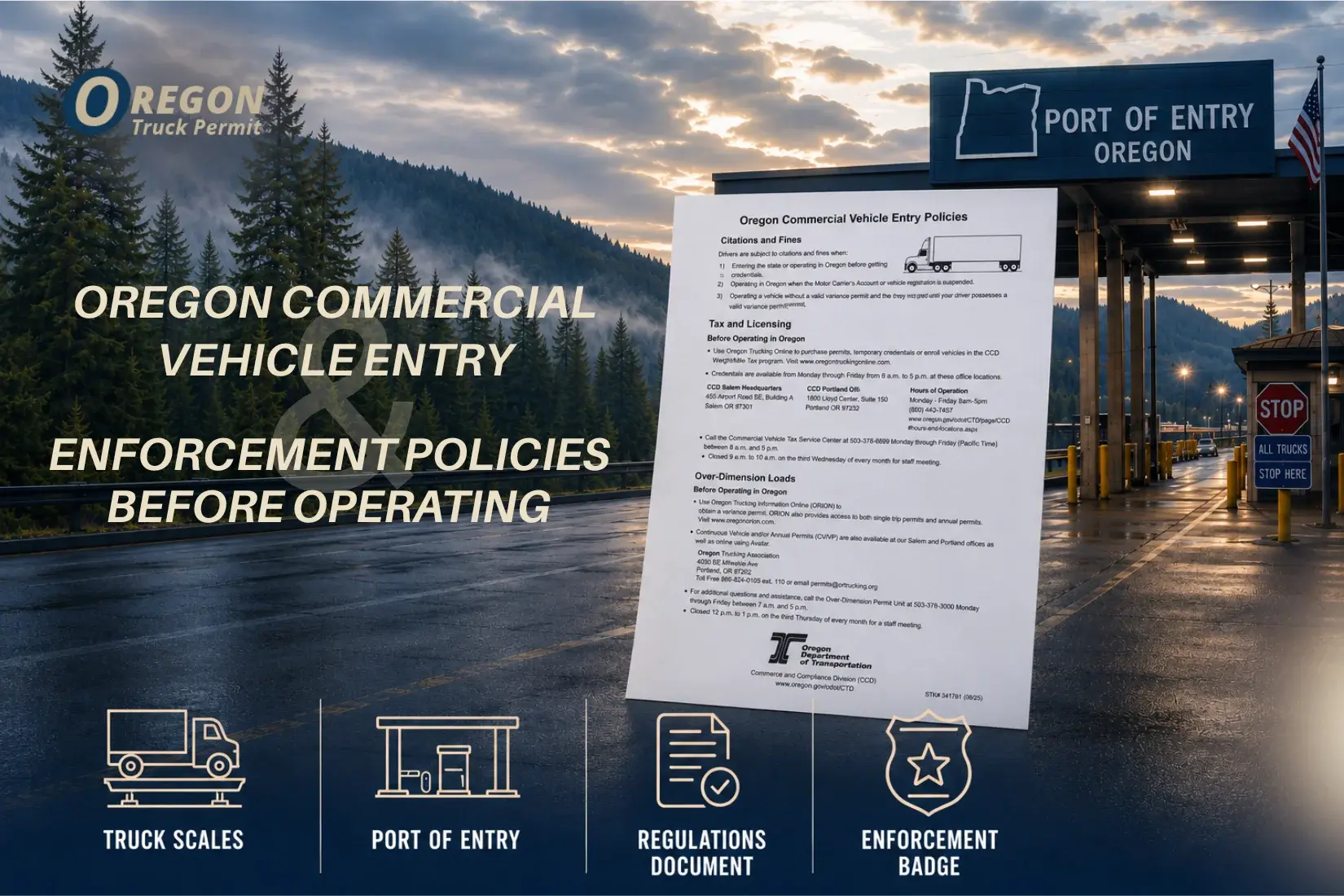
Understand Oregon Commercial Vehicle Entry and Enforcement Policies Before Operating
 Published on: June 11, 2026
 Category:
Blog
Category:
Blog
Anyone who runs trucks through Oregon long enough eventually learns the same thing: most compliance problems don’t start on the road. They start before the trip even begins. A permit gets overlooked. A temporary pass expires. Somebody assumes a registration covers something it doesn’t. Then a routine inspection turns into a delay nobody planned for.
Oregon takes commercial vehicle compliance seriously, and the state expects carriers to have the right paperwork squared away before operating. Depending on the truck, the load, and how often you’re running in Oregon, that could mean permits, temporary credentials, Weight-Mile Tax requirements, registration documents, or special variance permits. The tricky part is that there isn’t one universal answer for every carrier. A truck making a single delivery into Oregon may need something completely different than a carrier running weekly freight throughout the state. That’s why understanding Oregon’s entry requirements before dispatching a truck can save a lot of headaches later. Let’s walk through what carriers should know before crossing the state line.
What Oregon Commercial Vehicle Entry Policies Mean for Truckers
At their core, Oregon’s entry policies are pretty simple. The state wants commercial vehicles to have the proper credentials before they start operating on Oregon highways. That sounds obvious, but it’s where many carriers get tripped up. Some assume they can sort things out once they arrive. Others believe a permit they use in another state automatically covers Oregon requirements. Sometimes neither is true. One thing worth knowing is that not every port of entry offers licensing or registration services. If a required credential is missing, there may not be a quick fix waiting at the border. For out-of-state carriers, especially those making occasional trips, that’s important. What feels like a routine run can quickly become complicated if the necessary Oregon commercial vehicle permit or tax credential wasn’t handled ahead of time. A few minutes spent checking requirements before departure is usually far easier than dealing with delays after the truck arrives.
Oregon Motor Carrier Requirements Before Operating in Oregon
Not every trucking company enters Oregon under the same rules. A lot depends on the vehicle itself. Weight matters. Registration status matters. Even how often the truck operates in Oregon can affect what credentials are required. Some carriers only need temporary authority for occasional trips. Others eventually need a full Oregon motor carrier account because they’re operating here often enough that temporary solutions stop making sense. That’s why it’s helpful to look at Oregon requirements as a system rather than a single permit. The state isn’t just checking whether a truck has a registration. It’s looking at the entire operation to determine whether the carrier meets Oregon trucking regulations.
Oregon CCD Account Number and Motor Carrier Account Rules
If you’re operating in Oregon regularly, you’ll probably hear people mention the CCD sooner or later. The Oregon Department of Transportation Commerce and Compliance Division manages many of the state’s commercial vehicle programs, including tax reporting and motor carrier accounts. For carriers running heavier vehicles or making frequent trips into Oregon, having an Oregon CCD account number often becomes part of doing business in the state. Occasional operators may be able to rely on temporary credentials for a while. But once trips become more frequent, maintaining a proper account is usually the easier path. It removes a lot of the uncertainty that comes with trying to piece together temporary permits every time a truck enters Oregon.
Temporary Pass Limits and Weight-Mile Tax Basics
Temporary passes can be useful. They’re designed for exactly what the name suggests temporary operations. The problem comes when carriers start treating them as a long-term solution. Oregon tracks temporary pass usage, and repeated reliance on temporary credentials can eventually create situations where a permanent account makes more sense. There’s also the Weight-Mile Tax to think about. Unlike many states that rely primarily on fuel taxes, Oregon charges certain heavy commercial vehicles based on how much they weigh and how many miles they travel within the state. That’s why carriers should verify their vehicle weight, registration status, and Oregon mileage obligations before the trip begins. It’s much easier to handle those details in advance than to discover a problem during an inspection.