

Oregon Truck Permits in 2026: What Carriers Need to Know
 Published on: June 11, 2026
 Category:
Blog
Category:
Blog
Once you start dealing with Oregon permits regularly, you’ll hear about Oregon Trucking Online pretty quickly. It’s basically the state’s online system where carriers handle a lot of their administrative and tax-related trucking tasks in one place. Depending on your operation, it can be used for things like temporary permits, tax reporting, account updates, and other motor carrier filings. For many carriers, it ends up becoming the main place they go when they need to get something processed without calling around or mailing paperwork. The important thing to understand is that the system itself doesn’t decide what you need, it just processes what you request. So if you choose the wrong permit type or don’t have the correct information ready, you’ll still run into delays. That’s why most experienced carriers treat it like a final step, not the starting point. You figure out the permit first, then use Oregon Trucking Online to submit it.
Oregon Fuel Tax, IFTA, and Weight-Mile Tax Requirements
This is where Oregon starts to feel a little different compared to many other states. On top of permits, some carriers also have tax obligations depending on how and where they operate. These aren’t always obvious at first, especially for out-of-state operators who assume fuel tax rules are the same everywhere. In Oregon, your tax responsibilities usually depend on your operating authority, vehicle weight, and whether you’re running interstate or just within the state. It all connects back to how your carrier is registered and what kind of freight you’re hauling.
Oregon Fuel Tax and IFTA Filing
Some carriers may need an Oregon fuel tax setup if their operations fall under specific state requirements and they don’t already have the proper credentials in place. For interstate carriers, the IFTA system (International Fuel Tax Agreement) is usually what comes into play. It allows carriers to report fuel usage across multiple states instead of handling each jurisdiction separately. The process sounds more complicated than it usually is in practice. Most of it comes down to keeping clean records miles driven in each state, fuel purchased, and basic trip details. Without those records, filing becomes difficult fast, and that’s where carriers tend to run into compliance issues.
Oregon Weight-Mile Tax and Temporary Tax Passes
Oregon also uses a Weight-Mile Tax system, which applies to certain heavier commercial vehicles operating within the state. Instead of only relying on fuel tax, Oregon calculates tax based on how far a vehicle travels and how heavy it is. That means your reporting isn’t just about fuel it’s also about mileage and vehicle weight classification. For carriers that aren’t set up for ongoing operations in Oregon, a temporary tax pass may be used for short-term trips. This is usually a more limited option meant for occasional travel rather than regular business activity. Once a carrier becomes more established in the state, they typically transition into a full Oregon motor carrier account for ongoing reporting.
Oversize, Overweight, and ODOT Right of Way Permits
Not all permits are about taxes or registration. Some are strictly tied to how big or heavy your load is. If a vehicle or load exceeds Oregon’s legal size or weight limits, then Oregon oversize permits or overweight permits may be required before the trip begins. These rules are part of broader Oregon oversize regulations, which control how and when large loads can move across state highways. These permits are separate from regular trucking registration or tax requirements, and they often come with additional conditions like route restrictions, escort vehicles, or travel time limits. It’s also important not to confuse these with something like an ODOT right of way permit. That type of permit isn’t for trucking operations, it’s for construction or activity that affects state highway property itself, not normal freight movement.
Other Oregon Trucking Permits and Federal Filings Carriers May Need
Once you zoom out a bit, Oregon trucking starts to connect with federal-level requirements too. Not every carrier will need all of these, but depending on your operation, some of them may apply. These filings are usually more relevant for interstate carriers or for-hire operations.
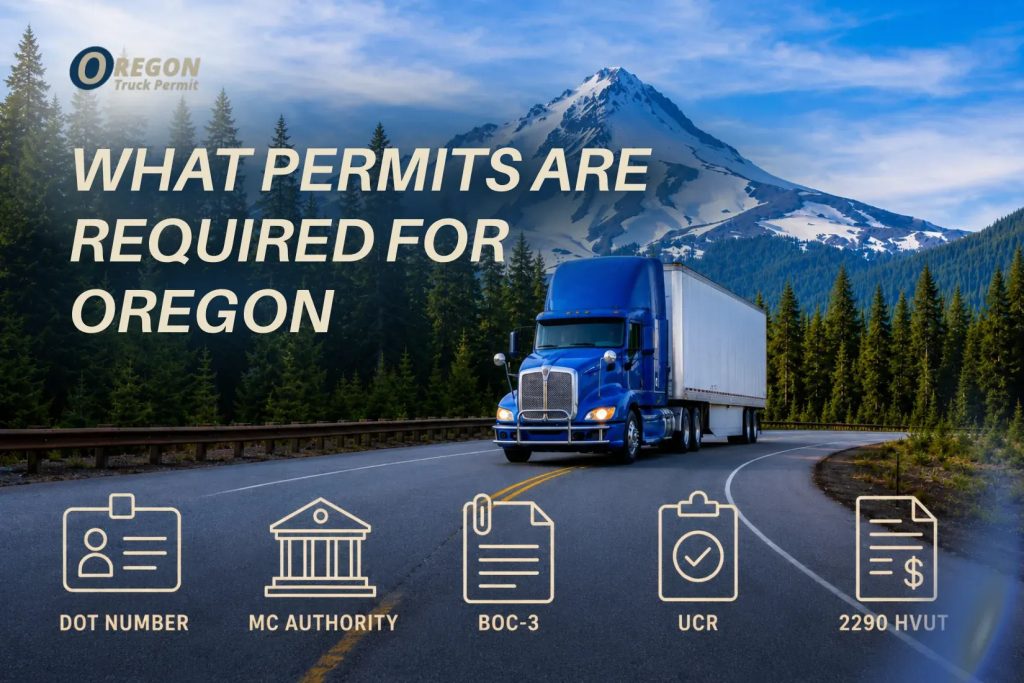
DOT Number
A USDOT number is basically an identification system for motor carriers. It’s used to track safety records, compliance history, and operating information. Most commercial trucking companies operating in or through Oregon will need one, depending on the type of operation they’re running. It’s one of those things that sits in the background but is required for everything else to function properly.
MC Authority
MC authority applies when a carrier is hauling freight across state lines for hire. If you’re operating as a for-hire carrier in interstate commerce, you’ll likely need MC operating authority before you can legally run those loads. It’s separate from Oregon state permits, but it often works alongside them.
BOC-3
The BOC-3 filing is one of those administrative steps that doesn’t get talked about much, but it’s required for carriers with operating authority. It designates process agents who can receive legal documents on behalf of the carrier in each state. Without it, MC authority applications can’t be finalized.
UCR
The Unified Carrier Registration (UCR) is a yearly requirement for many interstate carriers. It’s not Oregon-specific, but if you’re operating across multiple states, including Oregon, it often becomes part of your annual compliance checklist.
2290 HVUT
The Form 2290 Heavy Vehicle Use Tax is filed with the IRS for qualifying heavy vehicles operating on public highways. Carriers typically file this annually and receive a stamped Schedule 1 as proof of payment. This document is often required during registration or compliance checks.
How Oregon Truck Permit Helps With Online Permit Applications
Once you understand what permits or filings you might need, the next step is actually getting everything processed correctly and that’s where most delays usually happen. A lot of carriers know what they need in theory, but the paperwork side gets messy fast when details are missing or mismatched. Oregon Truck Permit support typically focuses on helping carriers handle things like trip permits, Oregon fuel tax setup, temporary Oregon trucking online filings, and general permit processing. It’s especially useful for carriers that don’t deal with Oregon regularly and just want to avoid guessing through the system. The goal is pretty simple: get the right permit, submit the correct information, and avoid rejections or delays that slow down operations.
Trucking in Oregon isn’t built around one single permit. It’s a combination of systems that all connect depending on how a carrier operates. Sometimes it’s a trip permit for short-term travel. Other times its tax-related requirements like weight-mile tax or IFTA. In other cases, it’s oversize or overweight permits, or federal filings like DOT and MC authority that determine whether a carrier can operate at all. Before applying for anything, it really comes down to getting the basics right: vehicle weight, registration details, license plate information, USDOT number, and the actual route and timing of the trip. Once those pieces are clear, choosing the correct Oregon truck permit becomes much easier. And for most carriers, that’s the real challenge, not the rules themselves, but making sure everything is aligned before the truck ever hits the road.